
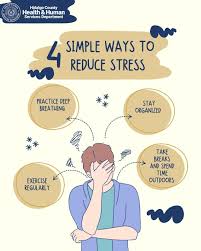
Quick stress relief is possible. It often involves simple, small actions. These can help calm your mind and body fast.
Focus on breathing, movement, or a quick distraction. These methods can make a big difference when you feel overwhelmed.
Understanding Stress Signals
Stress shows up in many ways. Your body sends signals. It’s trying to tell you something.
These signs can be physical. You might get headaches. Your stomach could feel upset.
Muscles can get very tense. Your heart might beat faster. Your breathing might get shallow.
It’s like your body is on high alert.
Stress can also show up mentally. You might feel worried a lot. It’s hard to focus.
Your thoughts might race. You might feel irritable. Small things can make you snap.
You may forget things easily. It feels like your brain is foggy. These are all common stress signs.
Sometimes, stress affects your mood. You might feel sad. Or you could feel tired all the time.
You might lose interest in things you usually like. Sleep can also be a problem. You might have trouble falling asleep.
Or you might wake up often. Stress really impacts your whole self.
Learning to spot these signs is key. It’s like having an early warning system. When you notice them, you can act.
You can take steps to reduce the stress. Before it gets too big. Paying attention to your body and mind helps a lot.
Why Does Stress Feel So Intense?
When you face something stressful, your body reacts. It releases hormones. The main ones are cortisol and adrenaline.
These prepare you for action. It’s called the “fight or flight” response. Your heart beats faster.
Your muscles get ready. Your senses become sharper.
This response is useful for real danger. Like escaping a dangerous animal. But in modern life, we often face ongoing stress.
Things like work deadlines. Or family worries. These aren’t usually life-threatening.
Yet, our body still reacts the same way.
This constant “on alert” state is tiring. It wears down your body. It can lead to health problems over time.
It makes it hard to relax. It can feel like a heavy weight. That’s why stress can feel so intense and draining.
Your brain plays a big role too. When you worry, your brain stays active. It keeps thinking about the problem.
It can get stuck in a loop. This makes it hard to calm down. It’s like your mind won’t switch off.
This mental buzz adds to the feeling of being overwhelmed.
Different people react to stress in different ways. What stresses one person might not bother another. Our past experiences matter.
How we learned to cope also plays a part. Understanding your own reaction is important. It helps you find what works best for you.
Common Stress Triggers
Work: Deadlines, difficult colleagues, job insecurity.
Family: Relationship issues, child-rearing stress, caring for elders.
Money: Bills, debt, financial worries.
Health: Personal illness, a loved one’s illness.
Major Life Changes: Moving, starting a new job, loss of a loved one.
My Own Stress Story: That Time the Coffee Machine Broke
I remember one Monday morning clearly. I was rushing. I had a big client call in thirty minutes.
I hadn’t slept well. My brain felt foggy. I stumbled into the kitchen.
I needed coffee. Badly. I loaded the coffee maker.
Pressed the button. Nothing happened. I pressed it again.
Still nothing. Then I saw it. A small, dark puddle under the machine.
My heart sank. The coffee machine was broken. Completely broken.
Panic started to rise. My hands felt shaky. My breathing got fast.
I could feel the stress wave hit me. This tiny thing felt huge. The client call was so important.
I couldn’t go in without coffee. It felt like the end of the world.
I stood there for a moment. Just staring at the broken machine. The clock on the microwave ticked loudly.
Each tick felt like a hammer blow. I felt a wave of annoyance. Then a bit of self-pity.
Why today? Of all days? I wanted to just sit down.
And maybe cry a little.
Then, a small thought flickered. This is silly. It’s just coffee.
It’s not the end of the world. I took a deep breath. A really shaky one.
I looked around my kitchen. I saw a box of tea bags. Not ideal.
But it would have to do. I made a cup of tea. It wasn’t coffee.
But it was warm. It was something.
I sat down for just one minute. I closed my eyes. I thought about the client call.
I knew I could still do it. Even without my usual strong coffee. It was a small shift.
But it made a difference. I realized that sometimes, the smallest things feel huge. But we can find a way through them.
Even when we feel totally stressed.
Quick Fixes: Finding Calm in Minutes
When stress hits hard, you need relief fast. You don’t have hours to meditate. You need something you can do right now.
The good news is, there are many quick ways to feel better. They are simple. And they work for most people.
Simple Stress Busters (Under 5 Minutes)
1. Deep Breathing:
Sit or stand comfortably. Close your eyes if you can. Breathe in slowly through your nose.
Feel your belly rise. Hold for a count of two. Breathe out slowly through your mouth.
Let all the air out. Repeat this 5-10 times. Focus only on your breath.
2. Quick Walk:
Step outside for a few minutes. Walk around the block. Or just walk around your office.
Focus on the movement. Feel your feet on the ground. Notice your surroundings.
It doesn’t have to be a long walk.
3. Listen to Music:
Put on a favorite song. Choose something calming or uplifting. Let the music fill your ears.
Close your eyes and just listen. Sing along if you feel like it. Music can change your mood quickly.
4. Drink Water:
Sometimes, dehydration can make stress feel worse. Get a glass of cool water. Sip it slowly.
Feel it refresh you. It’s a simple physical act that can help.
5. Stretch:
Stand up and stretch your arms overhead. Roll your shoulders back. Gently twist your torso.
Release some of that built-up tension. Even a few simple stretches help.
The Power of Your Breath
Your breath is a super tool. It’s always with you. You can use it anytime.
Anywhere. To calm your nervous system. Deep breaths send a message to your brain.
They tell it that you are safe. That you can relax.
When you are stressed, your breathing gets shallow. It’s quick and high up in your chest. This makes you feel more anxious.
It keeps your body in fight or flight mode. Slow, deep breaths do the opposite. They activate your “rest and digest” system.
Let’s try a simple technique. It’s called 4-7-8 breathing. Find a quiet spot.
Sit up straight. Or lie down. Close your eyes gently.
Inhale quietly through your nose for a count of 4. Hold your breath for a count of 7. Exhale completely through your mouth with a whoosh sound for a count of 8.
This is one breath. Do this 3-4 times. It helps slow your heart rate.
It quiets your mind.
You can do this before a meeting. Or when you feel overwhelmed. Or even when you can’t sleep.
It’s a simple, effective way to find instant calm. It feels good. Your body thanks you for it.
Breathing Exercise: Box Breathing
What it is: A simple way to focus your mind.
How to do it:
1. Inhale slowly for 4 seconds.
2. Hold your breath for 4 seconds.
3. Exhale slowly for 4 seconds.
4. Hold your breath again for 4 seconds.
Why it helps: It forces you to focus on each step. This distracts from worries. It helps regulate your breathing.
When to use it: Before a difficult conversation, when feeling anxious, or to regain focus.
Movement as a Stress Reliever
When you’re stressed, you might want to just freeze. But moving your body can actually help a lot. Physical activity releases endorphins.
These are natural mood boosters. They can help you feel better quickly.
You don’t need a gym. Or a long workout. A brisk walk is great.
Even just five minutes can make a difference. Notice the feeling of your legs moving. Feel the air on your skin.
It helps you get out of your head. And into your body.
Dancing is another fun option. Put on some music you love. And just move.
No one is watching. Let yourself be silly. It’s a great way to shake off tension.
It feels good. And it’s a great mood lifter.
Yoga or simple stretching can also help. It connects your mind and body. It helps release tight muscles.
Muscles often hold stress. Stretching them can feel like a huge relief. Even simple desk stretches can help your shoulders and neck.
The key is to find a movement you enjoy. Something that feels good to you. It doesn’t have to be hard.
It just has to get you moving. Even a little bit. This helps burn off some of that stress energy.
Movement Ideas for Quick Relief
Desk Stretches:
Neck rolls, shoulder shrugs, arm circles.
Quick Walk:
Around the house, yard, or block.
Dance Break:
Play one upbeat song and dance freely.
Stair Climb:
If you have stairs, walk up and down a few times.
Mindful Distractions
Sometimes, the best way to reduce stress is to shift your focus. This doesn’t mean ignoring your problems. It means giving your mind a break.
So you can come back to them with a clearer head.
Engage your senses. What can you see? What can you hear?
What can you smell? What can you touch? What can you taste?
Focusing on these can ground you. It pulls you into the present moment. This stops your mind from racing ahead.
Doing a simple puzzle is a good distraction. Or playing a quick game on your phone. Reading a few pages of a book can also help.
Even a few minutes of something enjoyable can reset your brain.
Talk to someone. A quick chat with a friend. Or a family member.
Sharing how you feel can lighten the load. Even if they don’t have advice. Just being heard helps.
A friendly voice can be very soothing.
Think about things you are grateful for. This can be hard when you’re stressed. But it works.
List 3-5 things you are thankful for. They can be small. Like a good cup of tea.
Or a sunny day.
Sensory Grounding Technique
What it is: Using your senses to connect with the present.
How to do it:
5 Things You Can See: Look around and name five things you see. Describe them in your mind.
4 Things You Can Touch: Notice four things you can feel. Like your clothes, a table, your skin.
3 Things You Can Hear: Listen for three sounds. Near and far.
2 Things You Can Smell: What are two smells around you? If you can’t smell anything, imagine a pleasant smell.
1 Thing You Can Taste: What does your mouth taste like? Or have a sip of water or a small snack.
Why it helps: It anchors you in the here and now. It interrupts anxious thought patterns.
The Importance of a Quick Break
When you feel stressed, your first thought might be to push through. To just keep working. But taking a short break can be more productive.
It allows your brain to reset. It prevents burnout.
Even a five-minute break can help. Step away from your desk. Go to a different room.
Look out a window. Do something completely unrelated to your stressor. This mental shift is very powerful.
Think of it like letting a computer cool down. When it overheats, it runs slower. Or it crashes.
Your brain is similar. It needs moments of rest to function well. These quick breaks are essential for managing stress.
It might feel counterproductive to stop when you’re busy. But the opposite is true. A refreshed mind is more efficient.
It makes fewer mistakes. It can solve problems better. So, give yourself permission to pause.
Break Strategies for Stress Relief
Micro-breaks: 30-60 seconds to stretch or look away from screen.
Mini-breaks: 5-10 minutes to walk, grab water, or listen to music.
Power Breaks: 15-20 minutes for a short walk outside or a brief meditation.
Key Idea: Consistency is more important than length. Short, frequent breaks are very effective.
When to Seek More Help
The quick stress relief methods are great for everyday moments. They can help you manage minor stress. But sometimes, stress is more than just a bad day.
It can become a real problem.
If stress feels constant. If it’s impacting your life a lot. It might be time to talk to someone.
This could be a doctor. Or a therapist. Or a counselor.
They can offer more support. And personalized strategies.
Signs that you might need more help include:
• Feeling overwhelmed most of the time. • Having trouble sleeping regularly. • Losing interest in things you used to enjoy.
• Feeling irritable or angry often. • Physical symptoms that don’t go away. • Thoughts of harming yourself.
There is no shame in asking for help. It’s a sign of strength. Professionals are trained to help you.
They can provide tools. And support. To help you manage stress effectively.
You don’t have to go through it alone.
Frequently Asked Questions
What is the fastest way to feel less stressed?
The fastest way often involves simple, immediate actions. Deep breathing exercises are very effective. They can calm your nervous system quickly.
A short walk or listening to calming music can also help within minutes.
Can I reduce stress in just 5 minutes?
Yes, you absolutely can. Focusing on deep breathing for a few minutes is a powerful tool. Simple stretching, a quick walk, or engaging your senses with a grounding technique can also provide relief in 5 minutes.
What should I do if I feel stressed right before a big event?
Before a big event, try some quick breathing exercises. Focus on inhaling slowly and exhaling completely. Grounding yourself by noticing your surroundings can also help.
Remind yourself that you are prepared and capable.
Are there any quick exercises to help with stress?
Yes, simple exercises like deep breathing, box breathing, or progressive muscle relaxation can be done quickly. Even a few minutes of gentle stretching or a very short, brisk walk can release tension and improve your mood.
What are some mindful distractions I can use?
Mindful distractions include engaging your senses (what you see, hear, smell, touch, taste). Other quick distractions are puzzles, a short game, reading a few pages of a book, or a brief chat with a friend. The goal is to shift your focus for a short period.
How can I stop my mind from racing when I’m stressed?
To stop a racing mind, try focusing on your breath. A simple grounding technique using your senses can also help anchor you to the present. Writing down your thoughts can also help get them out of your head and onto paper.
Moving Forward with Calm
Managing stress is a skill. It takes practice. You’ve learned some quick ways to find calm.
These tools are yours to use. Anytime you need them. Remember that even small actions can make a big difference.
Be patient with yourself. Some days will be harder than others. That’s okay.
The goal isn’t to eliminate stress. It’s to handle it better. When it pops up.
You have the power to find peace. Even in busy moments. Keep trying these simple methods.
