
Good posture involves training your body to sit, stand, walk, and lie down in ways that put the least strain on supporting muscles and ligaments. It helps keep bones and joints in correct alignment. This means muscles will be used properly.
It also decreases abnormal wear of joint surfaces. Poor posture can lead to pain, fatigue, and even affect your mood. Learning to correct it can make a big difference.
What Is Good Posture?
Good posture means your body parts are aligned. Your ears, shoulders, hips, knees, and ankles should all line up when you stand. When you sit, your feet should be flat on the floor.
Your knees should be at a right angle. Your back should be straight but not stiff. It’s about balance.
It’s not about being rigid or uncomfortable.
Think of it like building blocks. If the bottom blocks are crooked, the whole tower leans. Your body is similar.
When your posture is good, your spine has its natural curves. These curves help absorb shock. They also support your head.
Bad posture happens when these curves become too flat or too curved. This can put extra stress on your spine and muscles.
Why does it matter so much? Well, good posture helps your body work its best. It makes breathing easier.
It can boost your energy levels. It even helps your digestion. When your spine is aligned, your organs have more space.
They can function better. This is why paying attention to how you hold yourself is so important for overall health. It’s a simple thing that has big effects.
My Story: The Desk Slouch Epidole
I remember a time when I felt like I lived at my desk. Long hours were the norm. I’d be typing away, completely lost in my work.
My shoulders would creep up towards my ears. My head would jut forward. I’d hunch over my keyboard.
It felt like a permanent curve was setting into my upper back. Then came the neck pain. And the lower back ache.
One evening, I caught my reflection in a dark window. I looked like a question mark. My shoulders were rounded.
My stomach seemed to stick out more than usual. I felt a pang of surprise and a bit of dread. Was this really how I was carrying myself all day?
It was a wake-up call. I realized my work habits were hurting my body. I felt tired and achy, even after a full night’s sleep.
This was not sustainable.
It wasn’t just the physical pain. I felt less confident. My energy seemed to drain away faster.
I knew I needed to make a change. But I didn’t know where to start. The idea of “fixing” my posture felt like a huge, daunting task.
I thought it would take a lot of effort and maybe even special equipment. I was wrong. The first step was just noticing how I was sitting.
Understanding Your Spine’s Curves
Your Spine’s Natural Shape: Your spine isn’t straight. It has a gentle S-shape. There’s a curve inward in your neck (cervical lordosis).
There’s a curve outward in your upper back (thoracic kyphosis). And there’s another curve inward in your lower back (lumbar lordosis). These curves help your body absorb shock and move well.
When Posture Goes Wrong: Poor posture often exaggerates or flattens these curves. A forward head posture can happen when your head juts out. This puts extra strain on your neck.
A rounded upper back (kyphosis) can make you look slumped. These changes put stress on your muscles and bones.
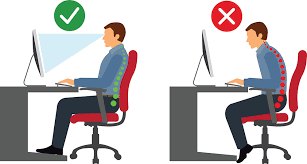
How to Sit with Good Posture
Sitting for long periods is common for many. Making sure you do it right is key. Start with your chair.
Your feet should be flat on the floor. If they don’t reach, use a footrest. Your knees should be about the same height as your hips.
Or maybe a little lower. This helps keep your lower back supported.
Next, focus on your back. Sit up straight. Use a chair with good lumbar support.
This is the support for your lower back curve. If your chair doesn’t have it, you can use a small pillow or a rolled towel. Lean back slightly into the chair.
This helps maintain the natural curve of your spine. Avoid leaning forward too much.
Keep your shoulders relaxed. Don’t let them round forward or pull up towards your ears. Your head should be balanced over your spine.
Your ears should be in line with your shoulders. When using a computer, your screen should be at eye level. This prevents you from craning your neck.
Your arms should rest comfortably. Your elbows should be bent at about a 90-degree angle.
Sitting Posture Checklist
- Feet Flat: Keep feet on the floor or a footrest.
- Knees Level: Knees should be at hip level or slightly lower.
- Back Supported: Use lumbar support for your lower back.
- Shoulders Relaxed: Let them drop, don’t hunch.
- Head Aligned: Ears over shoulders.
- Screen at Eye Level: Avoid neck strain.
- Elbows at 90 Degrees: Comfortable arm position.
Standing Tall: The Basics
Standing correctly is just as vital. It uses different muscles than sitting. Start by standing with your weight balanced evenly on both feet.
Your feet should be about shoulder-width apart. Imagine a string pulling you up from the top of your head. This helps you lengthen your spine.
Keep your shoulders relaxed and back. Don’t let them droop forward. Your chest should be open.
Your chin should be tucked slightly. This aligns your head with your spine. Your hips should be in a neutral position.
Avoid tilting them too far forward or backward. Your knees should be slightly bent. Don’t lock them straight.
This might feel strange at first. Your body is used to a certain way of standing. But over time, it will feel more natural.
Good standing posture helps you feel more stable. It also makes you look more confident. It’s about using your body efficiently.
This reduces strain on your joints and muscles.
Standing Posture: Myth vs. Reality
Myth: You need to be stiff and rigid to stand straight.
Reality: Good posture is about alignment and balance, not stiffness. It should feel natural and allow for movement.
Myth: Standing up straight all the time is tiring.
Reality: Once you build the right muscle support, good posture feels easier and more energizing than slouching.
Walking with Purpose
Your posture when walking matters too. It’s an extension of how you stand. As you walk, keep your head up.
Look forward, not at your feet. Imagine that string pulling you up from the top of your head again. This keeps your spine elongated.
Let your shoulders be relaxed. They should move naturally with your stride. Your arms should swing gently.
Your core muscles should be lightly engaged. This provides stability. Your stride should be natural.
Your heel should strike the ground first. Then your weight should roll forward to your toes.
Walking with good posture makes you feel more present. It helps you cover ground more efficiently. It also looks more graceful.
It uses your body in a balanced way. This prevents wear and tear. It’s a moving meditation for your body’s alignment.
Sleeping Smart: Posture in Bed
You spend about a third of your life sleeping. So, your sleeping posture is really important. The goal is to keep your spine in a neutral alignment.
This means avoiding twists or extreme curves.
On Your Back: This is often considered the best position. Place a pillow under your knees. This helps maintain the natural curve of your lower back.
Use a pillow that supports your neck. It should fill the space between your head and the mattress. Don’t use a pillow that’s too high or too flat.
On Your Side: This is also a good option for many. Place a pillow between your knees. This keeps your hips and spine aligned.
It prevents your top leg from pulling your spine out of place. Your head pillow should keep your neck in line with your spine. It shouldn’t be too high or too low.
On Your Stomach: This is generally the least recommended position. It forces your neck to twist. It also flattens the natural curve of your lower back.
If you must sleep on your stomach, try using a very thin pillow. Or no pillow at all for your head. You could also place a pillow under your pelvis.
This can help reduce the strain on your lower back.
Sleep Posture Guide
- Back Sleepers: Pillow under knees, neck-supportive pillow.
- Side Sleepers: Pillow between knees, neck-supportive pillow.
- Stomach Sleepers: Thin or no head pillow, maybe pillow under pelvis (less ideal).
- Mattress: A medium-firm mattress is usually best for support.
- Pillows: Choose pillows that keep your head and neck aligned with your spine.
Exercises to Improve Posture
Strengthening the right muscles is crucial. This helps your body hold good posture naturally. You don’t need a gym for most of these.
Bodyweight exercises work well.
Chin Tucks: These strengthen the deep neck flexor muscles. Sit or stand tall. Gently pull your chin straight back.
Imagine making a double chin. Hold for a few seconds. Release slowly.
Repeat 10-15 times.
Scapular Squeezes: These help pull your shoulder blades together. Sit or stand tall. Gently squeeze your shoulder blades together.
Imagine you’re trying to hold a pencil between them. Hold for a few seconds. Release.
Repeat 10-15 times.
Cat-Cow Stretch: This improves spinal mobility. Get on your hands and knees. Inhale as you drop your belly and lift your head and tailbone (Cow pose).
Exhale as you round your spine to the ceiling and tuck your chin (Cat pose). Move slowly between the two. Repeat 5-10 times.
Plank: This is great for core strength. Get into a push-up position. But rest on your forearms instead of your hands.
Keep your body in a straight line from head to heels. Engage your core. Hold for 20-60 seconds.
Repeat 2-3 times.
Core Strengthening for Posture
Why it Matters: Strong core muscles (abs, back, and sides) act like a natural corset. They support your spine and pelvis. This helps you stand and sit straighter.
Key Exercises: Plank, bird-dog, dead bug, and bridges are excellent. Even simple exercises like proper sit-ups can help when done correctly.
Stretching for Flexibility
Tight muscles can pull your body out of alignment. Stretching helps release this tension.
Chest Stretch: Tight chest muscles pull your shoulders forward. Stand in a doorway. Place your forearms on the doorframe.
Your elbows should be slightly below shoulder level. Step forward gently until you feel a stretch across your chest. Hold for 30 seconds.
Repeat 2-3 times.
Upper Back Stretch: This can help release tension between your shoulder blades. Sit or stand. Clasp your hands in front of you.
Round your upper back and reach your hands forward. Feel the stretch between your shoulder blades. Hold for 30 seconds.
Repeat 2-3 times.
Hip Flexor Stretch: Tight hip flexors can affect your lower back. Kneel on one knee. Place the other foot flat on the floor in front of you.
Gently push your hips forward. Keep your torso upright. You should feel a stretch in the front of the hip of your kneeling leg.
Hold for 30 seconds. Repeat 2-3 times per side.
Hamstring Stretch: Tight hamstrings can pull on your pelvis. Sit on the floor with one leg extended. The other leg is bent with the sole of your foot against your inner thigh.
Lean forward from your hips towards the extended foot. Keep your back straight. Hold for 30 seconds.
Repeat 2-3 times per side.
Stretching Routine Quick Scan
- Frequency: Aim to stretch daily, or at least 3-4 times a week.
- Duration: Hold each stretch for 20-30 seconds.
- Breathing: Breathe deeply and evenly while stretching.
- Pain: Never stretch to the point of pain. A gentle pull is good.
- Consistency: Regular stretching is more effective than occasional long sessions.
Common Posture Problems and What to Look For
It’s helpful to know what common issues look like. This helps you identify them in yourself.
Forward Head Posture: Your head juts forward. Your chin sticks out. It looks like your ears are in front of your shoulders.
This is very common with desk work and phone use.
Rounded Shoulders: Your shoulders slump forward. Your upper back might look rounded. This is often seen with hunching over keyboards or phones.
Anterior Pelvic Tilt: Your pelvis tilts forward. This causes your lower back to arch more than usual. Your belly might stick out.
Posterior Pelvic Tilt: Your pelvis tilts backward. This flattens your lower back. It can make your buttock look tucked under.
Kyphosis: An excessive outward curve of the upper back. It makes the upper back seem very rounded.
Lordosis: An excessive inward curve of the lower back. This is often called swayback.
Posture Check: What’s Normal?
Normal Curves: Remember, your spine has natural curves. They are supposed to be there.
Exaggerated or Flattened: Problems arise when these curves are too extreme or too flat. It’s about balance and alignment.
Pain Indicator: If you have persistent pain, it’s a strong sign your posture needs attention. Your body is telling you something is wrong.
Ergonomics: Setting Up Your Workspace
Your environment plays a huge role. Especially if you work at a desk. Good ergonomics can prevent many posture problems.
Chair: As mentioned, it should support your back. Your feet should be flat. Your arms should rest comfortably.
Consider an ergonomic chair if possible.
Desk Height: Your desk should be at a height that allows your arms to rest at about 90 degrees. Your shoulders should be relaxed.
Monitor Position: The top of your screen should be at or slightly below eye level. This prevents you from looking down or up too much. It should be about an arm’s length away.
Keyboard and Mouse: Keep them close to you. This avoids reaching. Your wrists should be straight.
Avoid bending them up or down.
Breaks: Get up and move regularly. Every 30-60 minutes is ideal. Walk around.
Stretch. This helps reset your posture.
Workspace Ergonomics Quick Tips
- Adjust Your Chair: Make sure your feet are flat and back supported.
- Monitor Height: Top of screen at eye level.
- Keyboard Placement: Close to your body, wrists straight.
- Take Breaks: Stand up and move every hour.
Daily Habits That Affect Posture
Beyond sitting and standing, everyday habits matter.
Looking at Your Phone: This is a big one. Holding your phone low helps. Or use a stand.
Avoid looking down for long periods. This causes “tech neck.”
Carrying Bags: Try not to overload one shoulder. Use a backpack with both straps. Distribute weight evenly.
Lifting Objects: Bend your knees. Keep your back straight. Lift with your legs, not your back.
Wearing Shoes: Supportive shoes are important. High heels can alter your balance and posture.
Stress: When we’re stressed, we often tense up. Our shoulders might hunch. Our breathing becomes shallow.
Managing stress can help release this physical tension.
Daily Habits to Watch For
Phone Use: Bring your phone up to eye level, don’t bend your neck down.
Carrying Load: Distribute weight evenly. Use a backpack when possible.
Lifting Technique: Always bend your knees and keep your back straight.
Footwear: Choose shoes that offer good support for your feet and body.
When Posture is a Concern
A little slouch now and then is normal. But there are signs that your posture needs more attention.
Persistent Pain: If you have ongoing neck, back, or shoulder pain, it’s a strong indicator. Especially if it doesn’t go away with rest.
Stiffness: If you feel very stiff and find it hard to move freely.
Visible Differences: If one shoulder is noticeably higher than the other. Or if your head always seems to be tilted.
Fatigue: Poor posture can make your muscles work harder. This can lead to unusual tiredness.
Breathing Issues: If you feel like you can’t take a deep breath. Compressed posture can affect your diaphragm.
Impact on Daily Activities: If your posture makes it hard to do things you used to do easily.
When to Seek Help
Doctor or Physical Therapist: If you experience persistent pain, stiffness, or visible alignment issues.
Professional Assessment: They can identify the root cause of your posture problems. They can provide a personalized plan.
Ergonomic Specialist: If your work setup is suspected to be the main cause.
Simple Checks You Can Do
You can do a few simple checks at home.
Wall Test: Stand with your back against a wall. Your heels, buttocks, back, and head should touch the wall. There should be a small space between your lower back and the wall.
About the width of your hand. If there’s no space, your lower back might be too arched. If there’s too much space, your pelvis might be tilted.
Mirror Check: Stand sideways in front of a mirror. Look at your ear, shoulder, hip, knee, and ankle. Are they roughly in a vertical line?
Shoulder Check: Relax your shoulders. Let them hang naturally. Do they round forward?
Or do they sit back comfortably?
Head Position: Imagine a line going straight down your body. Does your head stick out in front of that line?
Self-Assessment Guide
- Wall Test: Check your back alignment against a wall.
- Mirror Check: Look for vertical alignment of body parts.
- Shoulder Awareness: Notice if your shoulders are rounded.
- Head Alignment: See if your head is forward of your body.
When to See a Professional
While self-correction is possible, sometimes professional help is needed.
Persistent Pain: If your pain is chronic or severe, don’t ignore it. A doctor or physical therapist can diagnose the issue.
Significant Curve or Deformity: If you notice a very obvious hump in your upper back or an extreme sway in your lower back.
Numbness or Tingling: These sensations can indicate nerve compression. This needs medical attention.
Lack of Progress: If you’ve tried exercises and stretches consistently but see no improvement.
Specific Conditions: If you have a diagnosed condition like scoliosis or arthritis. A specialist can guide your posture care.
Who Can Help With Posture?
- Doctors: For initial diagnosis and referral.
- Physical Therapists: Experts in movement and rehabilitation. They create custom exercise plans.
- Chiropractors: Focus on spinal alignment.
- Ergonomists: Help optimize your workspace.
- Occupational Therapists: Can help with daily living adaptations.
Conclusion: A Journey to Better Well-being
Improving your posture is a journey. It takes time and consistent effort. But the rewards are huge.
Better comfort, less pain, and more energy. Start with small changes. Be patient with yourself.
Your body will thank you for it. Focus on awareness and small, daily improvements.
Frequently Asked Questions
How long does it take to correct posture?
Correcting posture is a gradual process. It can take several weeks to months to build new habits and strengthen muscles. Consistency is key.
You’ll start feeling better sooner, but significant changes take time.
Can poor posture cause headaches?
Yes, poor posture, especially forward head posture, can lead to tension headaches. It strains the muscles in your neck and upper back. This tension can radiate to your head.
Is it bad to slouch?
Occasional slouching is not harmful. However, chronic slouching puts uneven stress on your spine. It can lead to muscle imbalances, pain, and stiffness over time.
What is the best sleeping position for posture?
Sleeping on your back or side is generally best. These positions allow your spine to maintain its natural alignment. Sleeping on your stomach is usually not recommended.
Can exercise equipment help with posture correction?
Some equipment can help. Resistance bands are great for strengthening back muscles. Stability balls can improve core strength.
However, many effective exercises can be done with just your body weight.
How can I improve my posture at work?
Set up your workstation ergonomically. Ensure your chair and desk are adjusted correctly. Take regular breaks to move and stretch.
Be mindful of your sitting position throughout the day.
